
2025 Programme Highlight
Clean Energy Solutions:
Accelerating Progress Across Asia
In 2025, clean energy across Asia entered a defining and dynamic new phase. Governments increasingly placed it at the heart of economic competitiveness and growth, and the conversation shifted from whether renewable energy (RE) should lead the region’s transition to how fast – and how well – that transition could be built. Progress accelerated at different paces, with standout results wherever sound policy design, infrastructure readiness, and credible demand came together. Across this landscape, Tara’s partners played an important role: turning ambition into buildable plans, supporting the market mechanisms and procurement systems that make projects bankable, safeguarding public standards and trust, and laying the grid, storage, and finance foundations to scale solar, wind, and the systems that connect them.
Key Highlights
Across the region, solar capacity grew by an estimated 32 GW from 2024 to 2025, while wind power grew by an estimated 3 GW.
Power development plans in Indonesia, Japan, Malaysia, and Pakistan signalled increased ambition for renewables. Indonesia committed to deploying 100 GW of solar by 2035, while the Philippines auctioned 16.9 GW of new renewables capacity.
Offshore wind advanced in South Korea, Japan, and the Philippines, with faster, clearer pathways for new projects and the launch of the Philippines’ first offshore wind auction.
In South Korea, the new Ministry for Climate, Energy and Environment advanced smart-grid planning, introduced measures to promote agrivoltaics, mandated solar installations in public car parks, and promoted RE100 industrial zones.
In Pakistan, the solar boom continued at extraordinary scale, reaching a total installed capacity of around 38 GW — much of it driven by ground-up, distributed adoption — with battery imports doubling.
Regionally, Tara developed a new grids, storage, and flexibility strategy and deployed US$4.1 million in early grants to 36 organisations.
Case Study
Nurturing homegrown clean energy expertise in South Korea
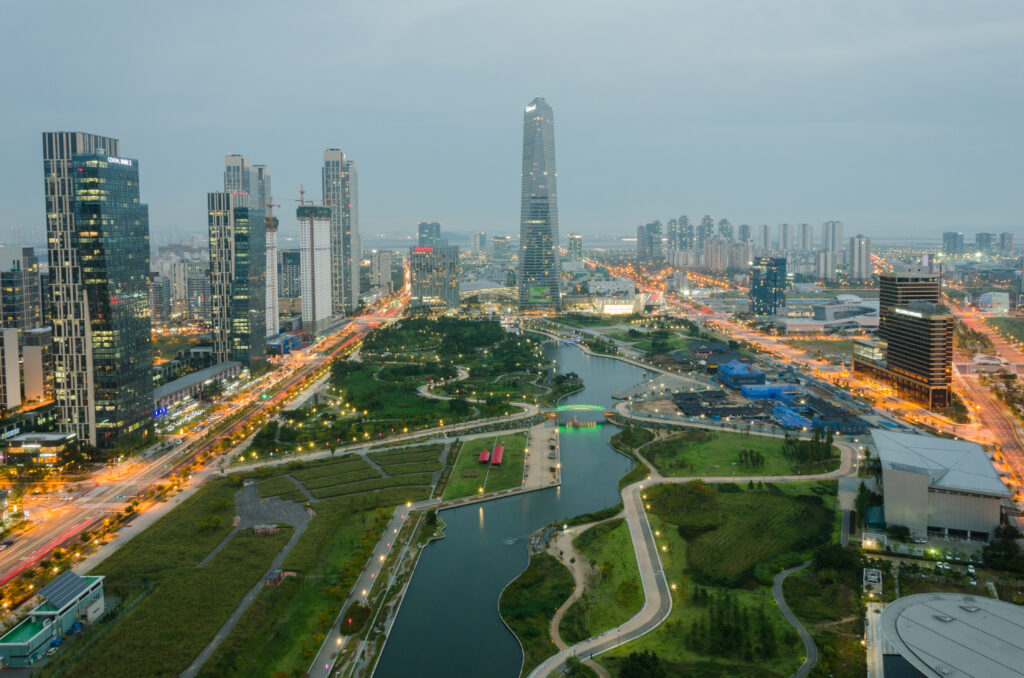
South Korea’s clean energy progress in 2025 reflected something built over many years: a committed, locally rooted ecosystem of clean energy expertise. Across the country, civil society, industry, researchers, and investors had developed a substantial foundation of evidence and ideas on the energy transition — framed around energy security, industrial competitiveness, and shared community benefit, and shaped through the country’s own priorities and public debate.
That foundation meant that when national momentum on climate and energy grew, the country could draw on a ready base of analysis and proposals rather than starting from scratch. The transition agenda spanned institutional frameworks, renewable energy acceleration pathways, community benefit-sharing, grid expansion, rooftop solar, and RE100 industrial zones — each already supported by policy analysis, technical pathways, and evidence for policymakers and the public. Tara partners, including Solutions for Our Climate (SFOC), NEXT group, Institute for Green Transformation (IGT), Energy Transition Forum (ETF) and others, were part of this wider ecosystem, contributing technical analysis, evidence, and engagement alongside many others.
National leadership drew on this readiness to move at pace in 2025. The government established a unified Ministry of Climate, Energy and Environment, strengthening coordination across the transition. It advanced a nationwide “energy highway” — a high-voltage transmission backbone designed to carry renewable power from coastal generation hubs to industrial and population centres, and to support RE100 industrial zones. It moved to extend land-use rights for agrivoltaics from 8 to 30 years, materially improving the investment case for farmer-inclusive solar. And in a clear signal of direction, South Korea committed to phasing out coal by 2040 and joined the Powering Past Coal Alliance.
What stands out is how this progress came about: durable transitions are built locally and over years, by institutions with the credibility and evidence to inform their own country’s choices. South Korea in 2025 is a reminder that where local expertise meets national leadership, the energy transition is well placed to move quickly — on its own terms.
Case Study
Supporting the Philippines' shift to competitive clean energy auctions
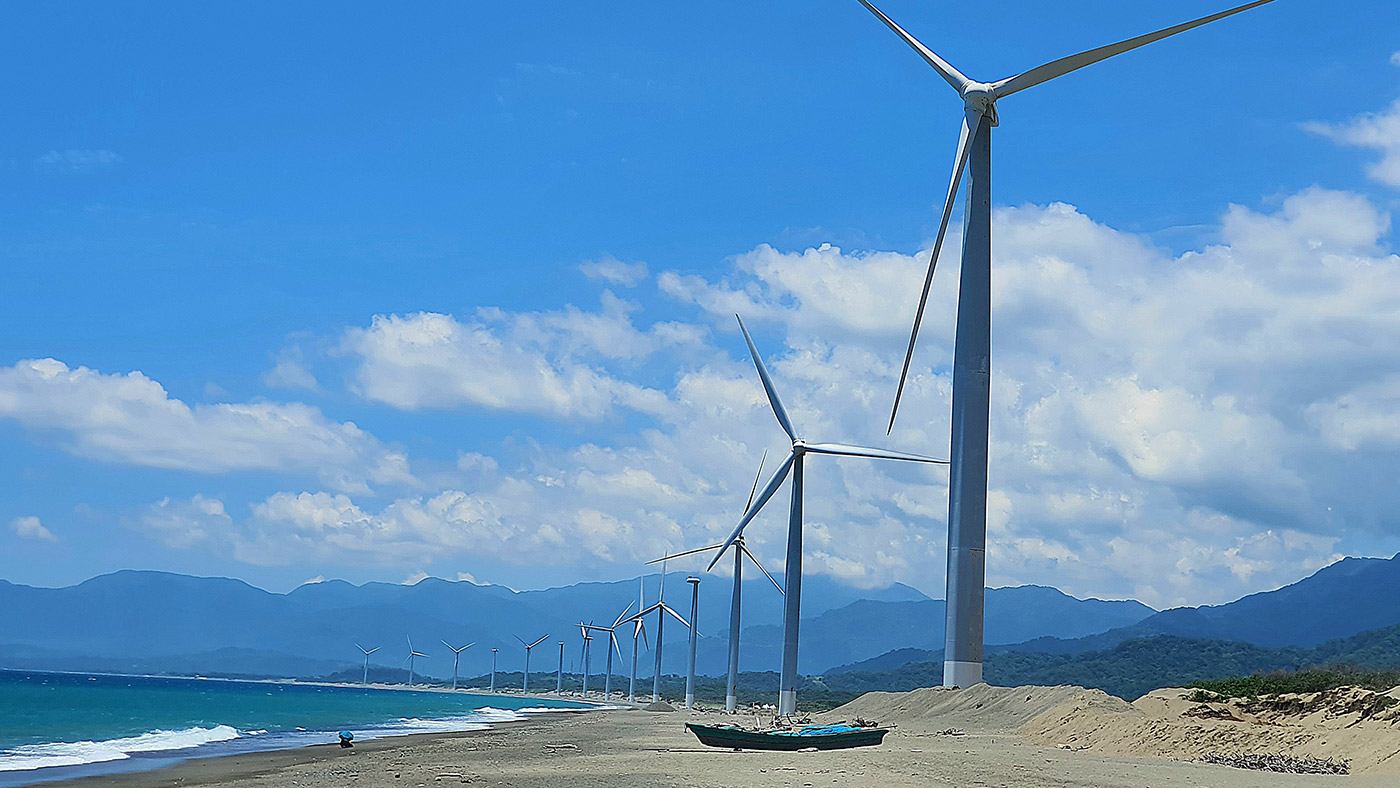
In 2025, the Philippines demonstrated how well-designed competitive procurement can move renewable energy from ambition to awarded capacity at scale. Through its national Green Energy Auction (GEA) programme, the country held two auctions that targeted 15.1 GW of additional RE capacity, and ended up awarding 16.9 GW of new clean capacity — spanning solar, onshore wind, and other energy sources. It was one of the region’s most visible examples of a national procurement programme translating directly into clean energy volume.
The auctions stood out not only for their size but for their breadth. By awarding a diverse mix of technologies, including firm and storage-paired capacity, the programme reflected the government’s grounded approach to building a reliable, renewables-based power system rather than scaling a single technology in isolation. In November, the Department of Energy further launched GEA-5, targeting 3.3 GW of offshore wind, with awards expected in 2027 — extending the model to a sector still in its early stages across the region.
The credibility of any auction rests on its design: tariffs that attract serious developers, terms that lenders will finance, and rules that give projects a realistic path to construction. As the government refined successive rounds, Tara partners — including the Global Wind Energy Council (GWEC) and Institute for Climate and Sustainable Cities (ICSC) — contributed technical input on auction and tariff design, drawing on international and local experience to support the programme’s bankability.
Looking ahead — while the auction awards are an important milestone, translating them into operating projects will depend on grid and port readiness (for offshore wind), financing, and stable implementation. The Philippines’ experience in 2025 points to a practical lesson for the region: clear, locally-led competitive procurement can unlock significant clean energy volume — and a supportive ecosystem of technical, financial and industry expertise can help strengthen the conditions for that capacity to be built.