
2025 Programme Highlight
Just Energy Transition:
Supporting People and Progress
The energy transition will not be just or durable without the meaningful participation of those most affected. In 2025, Tara partners focused on strengthening community perspectives at the local level, helping people, workers, and communities participate in how clean energy is planned, built, and managed. Beyond mitigating harm, this work sought to maximise the benefits of the transition for local communities — channelling clean energy into jobs, incomes, and improved livelihoods. Partners also supported managed transitions away from coal, and invested in the people, organisations, and ecosystems that will carry this work forward.
Key Highlights
Across the region, strengthening local voices: new multi-stakeholder platforms gave communities a stronger role in RE development, deepening dialogue among developers, communities, and local governments.
- In the Philippines, Tara partners set up multi-stakeholder platforms in two provinces to strengthen benefit-sharing and environmental safeguards in offshore wind development.
- In Japan, Tara partners developed a proposal for the coexistence of offshore wind and fisheries by first gathering the opinions of fishing communities, and then informing how developers and policymakers should engage with them.
- In Thailand, Tara partner the Just Transitions Incubator (JUTI) launched the inaugural Bangkok Climate Action Week, one of the region’s largest climate convenings centering local and regional voices — engaging more than 77,000 participants across 270+ events and catalysing over 20 new partnerships.
In Malaysia, delivering community benefits: the Sabah RE2 Consortium was formed to support implementation of Sabah’s Renewable Energy Roadmap, helping the state work towards 80% renewables by 2050 while expanding clean power access to underserved communities.
In the Philippines, supporting local livelihoods: Tara partner the Peace and Equity Foundation (PEF) helped integrate renewables into Bukidnon’s coffee industry roadmap, using solar to cut diesel costs and improve post-harvest and processing for smallholder farmers.
In Pakistan, advancing inclusive transport: the National Electric Vehicle Policy 2025–30 launched with over US$30 million in its first year to support over 116,000 electric motorcycles and e-rickshaws — including a dedicated quota for women — as more than 76,000 electric motorcycles, 5,000 electric cars, and 400 electric buses became operational nationwide.
Across Southeast Asia, mobilising funders: Tara co-founded the Just Energy Transition Community (JETC) with the Philanthropy Asia Alliance (PAA), convening global and regionally based funders to support clean energy initiatives that centre people and livelihoods.
Regionally, building skills and capacity: more than 200 participants from 75 climate organisations took part in dedicated development trainings organised by Tara partners.
At COP30 Brazil‘s Regional Climate Foundations Pavilion, Tara supported the launch of IEA’s new Southeast Asia Indicators Handbook, joining regional partners to discuss how a people-centred transition can track equitable outcomes like jobs, energy access and resilience alongside emissions.
Case Study
Finding their way: young talent in Pakistan's energy transition
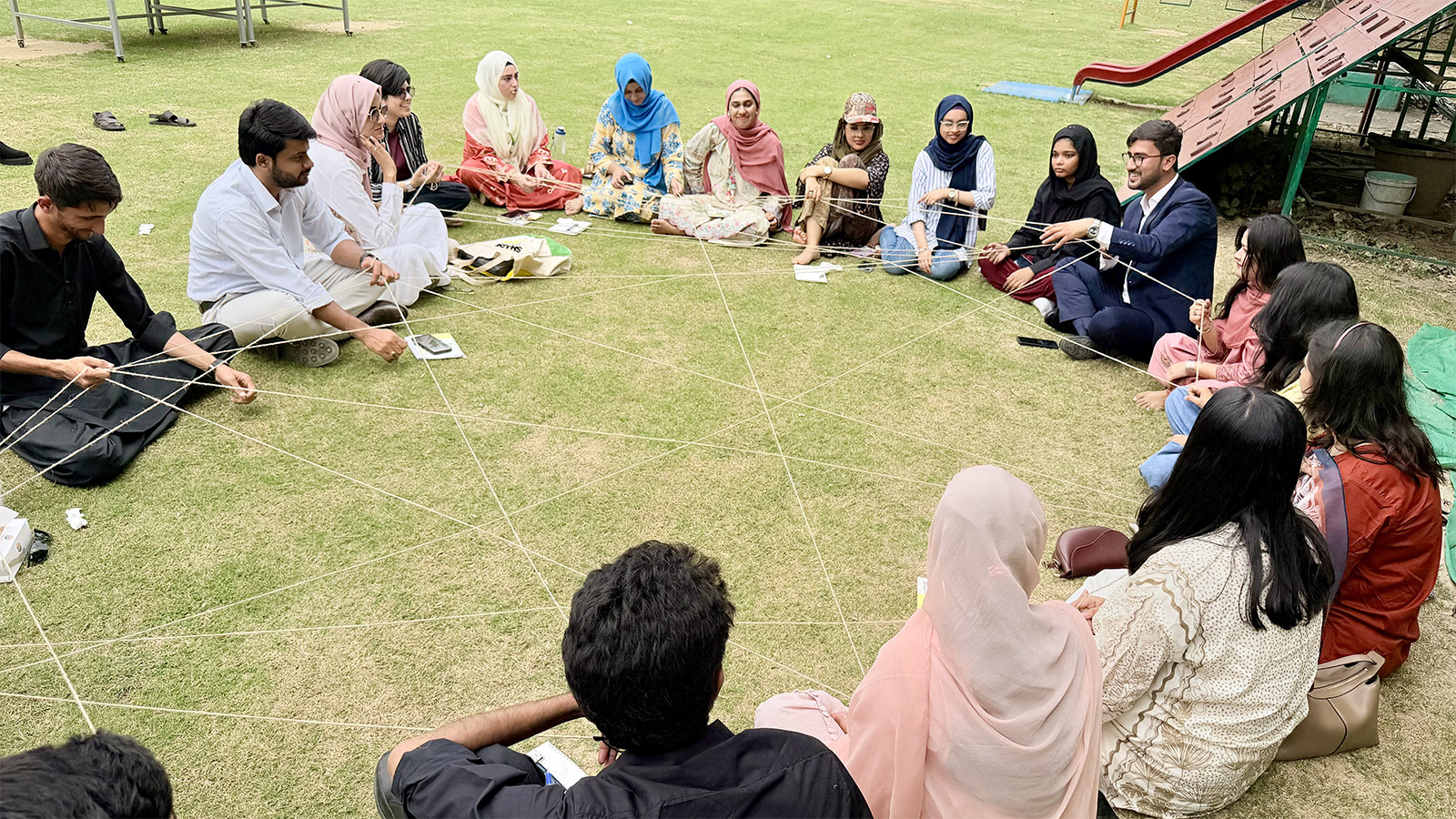
Pakistan’s energy transition is often treated as a technology problem — panels, grids, storage. But delivering it also requires people who can move between engineering, policy, and public life, and who understand how institutions, markets, and communities intersect. Building that bench of talent, and giving it a place to grow, is central to a transition that holds.
Tara partner Renewables First established the Margalla School on Energy and Climate, an immersive fellowship programme, to build exactly that pipeline. Rather than a conventional training course, Margalla runs as a residential fellowship that brings engineers, policymakers, journalists, researchers, and entrepreneurs into the same room to work through the energy transition together.
When Bisma Tahir, a young engineer living in Pakistan, applied to the Margalla School on Energy and Climate, she already had an engineering degree and a stable job, but could not see where she fit in Pakistan’s energy transition. Like many young professionals, she had technical knowledge but few opportunities to understand the bigger system or work alongside the people shaping it.
For two weeks, she learned alongside government officials, journalists, researchers, entrepreneurs, and development practitioners, coming to realise through negotiations, simulations, and conversations that the energy transition was not simply an engineering challenge, but a question of institutions, markets, and communities working together.
The experience changed the direction of her career: when Margalla later offered a four-month fellowship for a small group of fellows, Bisma left the security of her job to take one of only four spots, contributing to research, stakeholder engagement, and policy work on Pakistan’s fast-growing solar market.
Her experience reflects a wider pattern. Over five cohorts, thousands of professionals across Pakistan have applied to Margalla asking the same question Bisma once asked. What the programme found was a shortage of spaces where engineers, policymakers, journalists, researchers, and public officials could learn from one another and build a shared understanding of the challenges ahead.
The fellowship is only the starting point. Fellows continue through mentorship, incubation, and an alumni network that keeps generating opportunities well after the residential programme ends. Alumni microgrants have funded new leadership initiatives, including Pakistan’s first youth-led web series on the energy transition, covering energy access, governance, misinformation, and what a just transition could look like — told through stories rooted in people’s everyday experience.
More than 100 Margalla alumni are now working across government, industry, academia, think tanks, and civil society to advance Pakistan’s energy transition from within. What began as a fellowship has grown into a system for identifying talent, building pathways, and equipping people to lead the transition themselves.
Case Study
Empowering communities to shape the agenda at one of the region's largest climate convenings
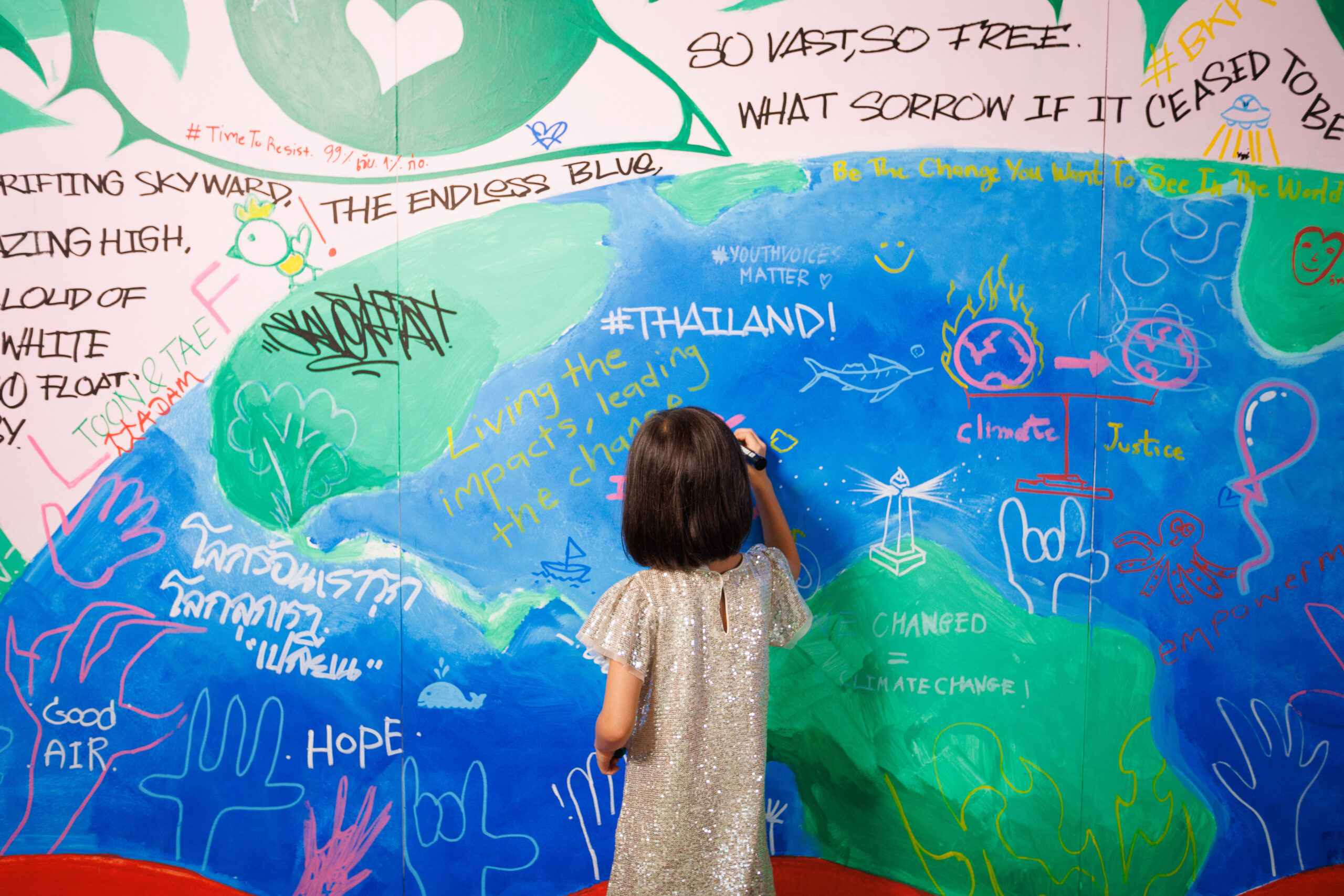
Major climate gatherings can shape regional agendas and draw attention and funding to where it is needed most. They are also at their strongest when the communities, workers, and young people closest to the energy transition help shape the conversation — grounding climate action in local realities and building the shared trust that helps it endure. Creating space for those voices, and giving them a platform of real visibility, is central to a transition that is both just and durable.
Tara partner Just Transitions Incubator (JUTI), a Bangkok-based organisation, set out to do exactly that. Working in partnership with the Bangkok Metropolitan Administration, JUTI launched the inaugural Bangkok Climate Action Week — Southeast Asia’s first Climate Action Week, and the largest climate gathering held to date in the region. Rather than a conventional conference, it was designed to open as many entry points into climate action as possible.
Held at the end of September 2025, BKKCAW featured more than 270 events across the city and engaged over 77,000 participants on site, spanning public art, community workshops, youth-led initiatives, conferences, and policy dialogues. By centring local voices — residents, workers, young people, and community groups not always present in climate and energy debates — the programme grounded the week in the region’s own social, cultural, and economic realities, ensuring it reflected the priorities of the communities it served.
The approach also showed how visibility can translate into lasting collaboration. BKKCAW catalysed more than 20 new partnerships and initiatives, many continuing well beyond the event — positioning JUTI not only as a convenor, but as a catalyst for sustained, community-led action.
By working closely with city government while keeping community leadership at the center, JUTI helped establish a new model for city-led climate engagement in Southeast Asia — one that gives communities a stake in the regional climate conversation, and builds enduring networks and momentum for a just, people-centred transition.